
The Bicycle
A bicycle is a "compound machine". It is a compound machine because it is made of several simple machines working together to make your job (riding) easier.
While a simple machine like a lever or a pulley has only one or two parts, a compound machine connects these simple machines so they can share the work.
Think of your bike as a "team" of these six simple machines:
Levers: Your brake handles are levers that you pull with a little force to squeeze the brake pads with a lot of force. Your handlebars also act like a lever to help you steer the front wheel easily.
Wheel and Axle: This is the most obvious one! Your front and back wheels use this system to roll smoothly over the ground with very little friction.
Pulleys: The chain and gears work like a pulley system. When you pedal, the chain transfers your energy from the front gears to the back wheel to make it turn.
Screws: If you look closely at your bike, you'll see dozens of screws and bolts. These are simple machines that hold all the different parts of the bike together.
Inclined Planes and Wedges: The teeth on your gears are actually little wedges that help the chain grab on tightly.
A bicycle is a perfect example of how math, science, and technology work together!
When you look at a bike, you’re looking at engineering.
People use science to find new materials that make bikes lighter and safer, and they use math to figure out how far you can travel with every pedal. Bikes are also great for our planet because they don't need fuel to go.
While a simple machine like a lever or a pulley has only one or two parts, a compound machine connects these simple machines so they can share the work.
Think of your bike as a "team" of these six simple machines:
Levers: Your brake handles are levers that you pull with a little force to squeeze the brake pads with a lot of force. Your handlebars also act like a lever to help you steer the front wheel easily.
Wheel and Axle: This is the most obvious one! Your front and back wheels use this system to roll smoothly over the ground with very little friction.
Pulleys: The chain and gears work like a pulley system. When you pedal, the chain transfers your energy from the front gears to the back wheel to make it turn.
Screws: If you look closely at your bike, you'll see dozens of screws and bolts. These are simple machines that hold all the different parts of the bike together.
Inclined Planes and Wedges: The teeth on your gears are actually little wedges that help the chain grab on tightly.
A bicycle is a perfect example of how math, science, and technology work together!
When you look at a bike, you’re looking at engineering.
People use science to find new materials that make bikes lighter and safer, and they use math to figure out how far you can travel with every pedal. Bikes are also great for our planet because they don't need fuel to go.
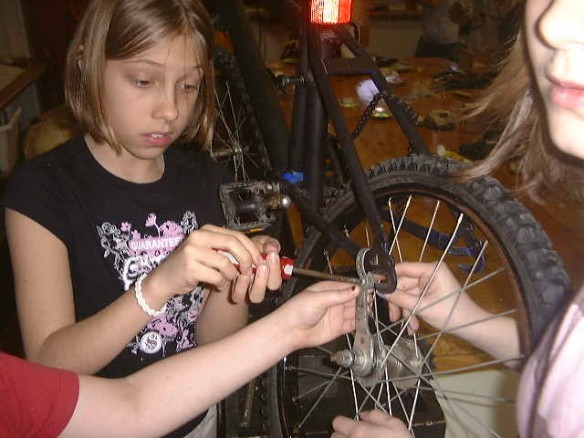

Connecting the coaster brake lever.
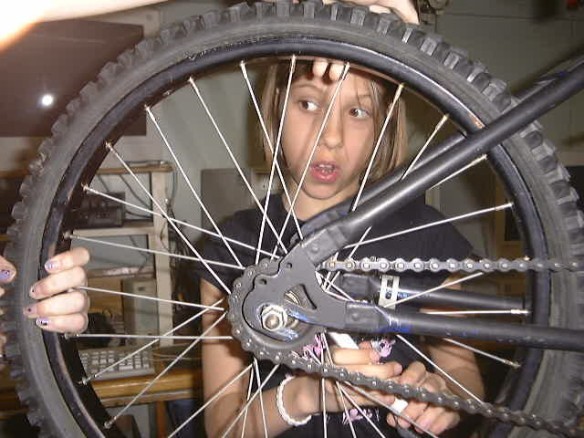
Adjusting the drive chain (pulley) tension.
Mounting and adjusting the rear wheel and axle.
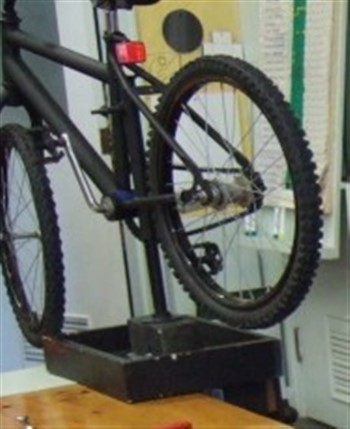
This permanently mounting bicycle stand was welded to the bike by one of my parents. Great job!
Every bike is made of simple machines. By learning how they work, you can use your design skills to be creative. Who knows? You might even invent a totally new kind of bicycle one day!
Bike Parts to Know:
Bike Parts to Know:
Frame: The body of the bike.
Wheels & Tires: What help you roll.
Pedals & Chain: These transfer your energy to the wheels.
Gears: These make it easier to climb hills.
Handlebars: Used for steering.
Saddle: Your seat.
Brakes: For stopping safely.
Reflectors: To help people see you.
Action Words:
Ride and Cycle
Pedal
Commute (traveling to school or work)
By using bicycle we can be healthy as well as it is environment friendly as it does not use any fuel to run.
Levers: Your Strength Multipliers
A lever is a stiff bar that pivots on a fixed point called a fulcrum.
Brake Handles: These are levers. When you pull the handle with a small amount of force over a long distance, the lever multiplies that force to squeeze the brake pads against the wheel very hard.
Pedals: The pedal and the metal arm (called a crank) act as a lever. Your legs push down, and the lever helps turn the gears with more power.
Handlebars: These act like a lever to make steering easier.
Pulleys: Moving the Power
A pulley uses a wheel and a chain or rope to change the direction of a force.
The Chain and Gears: The bicycle chain and the gears (sprockets) work together like a pulley system. They take the power from your pedaling and pull the rear wheel to make it spin.
Changing Gears: When you shift gears, the chain moves to a different-sized pulley. A larger gear helps you climb hills easily (more force), while a smaller gear helps you go faster on flat ground.
Wheel and Axle: Rolling Forward
This machine consists of a large wheel connected to a smaller rod called an axle.
Main Wheels: The tires and the center hubs are perfect examples of a wheel and axle. This setup reduces friction against the ground, so you can roll smoothly instead of sliding.
Other Hidden Machines
Screws: These hold the frame, handlebars, and seat together tightly.
Wedges: The teeth on the gears are shaped like wedges to help them grip the links in the chain