
An Introduction to Cardboard
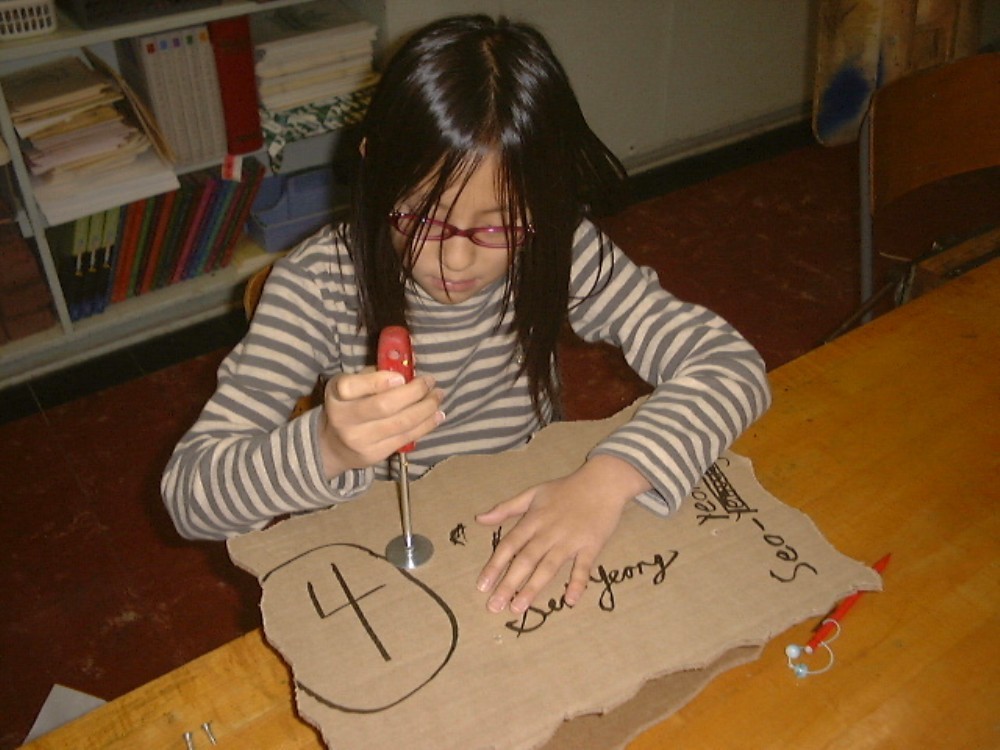
Using a screwdriver, washer and
wood screw to attach a piece of
cardboard to wood.
wood screw to attach a piece of
cardboard to wood.
House By The Sea Project
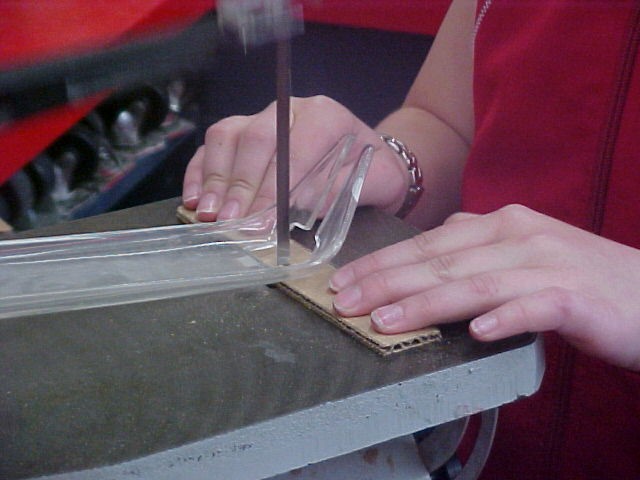
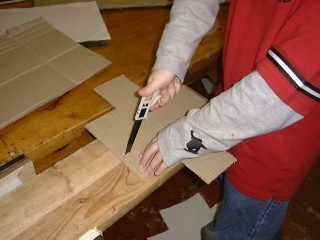
The piece of cardboard slid through the blade like butter. No smoke. No shaking. Best of all, because cardboard is soft, it didn't split into sharp splinters like wood does. It was safe and easy!
Right then and there, I had a big idea. We were going to build lighthouses, and cardboard was going to be our superpower material.
The very next day, the classroom was buzzing. The student who had inspired me was already hard at work on her lighthouse base. She wasn't just rolling a tube; she was using a protractor to measure precise 60-degree angles onto a flat sheet of cardboard.
With a few quick snips of her scissors, she folded the cardboard along her lines, taped the edges, and looked up at me with a huge grin. Right there on her desk was a perfect hexagon—a six-sided shape that would become the strong foundation for her tower.
"Look Mr. Savage!" she said, pointing to the shape. "The protractor showed me that if I connect six triangles together, I get a hexagon. Making this out of cardboard helped me finally see the secret: a circle is just a shape with an infinite number of sides!"
Standing in my classroom that afternoon, I smiled. I didn't need expensive wood. I just needed a stack of old boxes. Cardboard didn't just save our classroom budget—it gave my students a hands-on way to master geometry and turned them into real architects.