


Diagonal Line
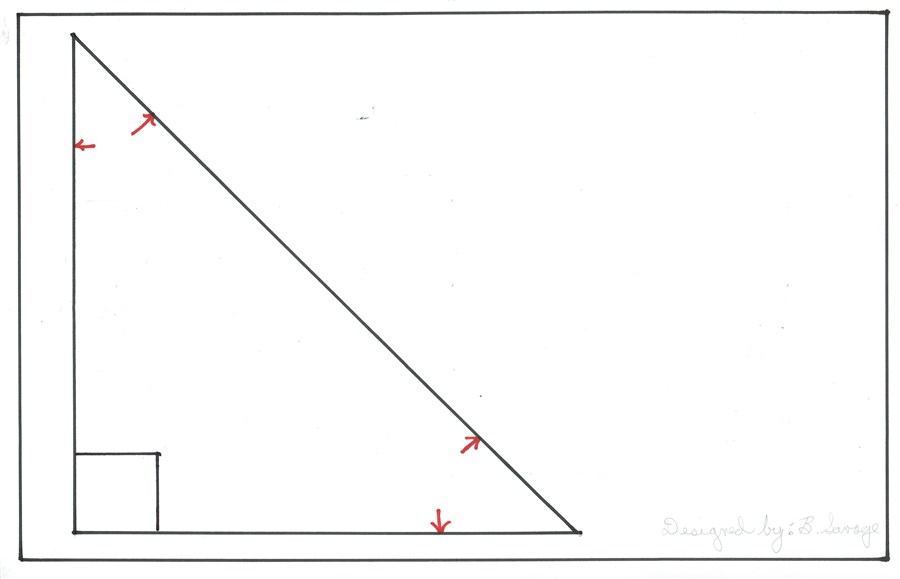
Isosceles, right angle triangle
Joining the opposite corners of the square forms two, ninety degree, isosceles triangles. Each triangle has two forty five degree angles.
Inventors used this triangle to design and make a miter square, a very common tools used by carpenters and metal workers.
(900)
(450)
(450)
Diagonal Line
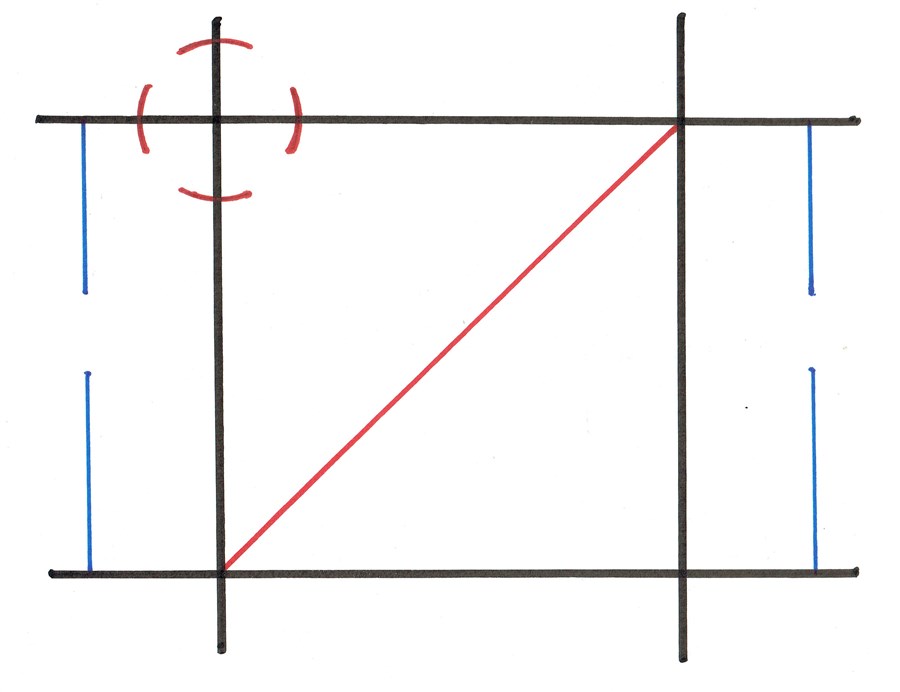
A diagonal line in a square is a straight line that goes from one corner straight across to the opposite corner.
Every square has exactly two diagonal lines, and they form a big "X" right inside the square.
1. Connecting Opposite Corners
Imagine you are standing in the bottom-left corner of a square room. If you walk straight across the middle of the room to the top-right corner, the path you walked is a diagonal line. It connects two corners that are not next to each other.
2. Splitting into Triangles
When you draw one diagonal line inside a square, it cuts the square perfectly into two equal-sized triangles. If you draw both diagonal lines, they cross exactly in the center and slice the square into four equal triangles.
3. Special Features of Square Diagonals
Equal Length: Both diagonal lines in a square are exactly the same length.
The Perfect Cross: When they cross each other in the middle, they form a perfect, square (90 degree) corner (called a right angle).
Perfect Halves: They cut each other exactly in half.
Every square has exactly two diagonal lines, and they form a big "X" right inside the square.
1. Connecting Opposite Corners
Imagine you are standing in the bottom-left corner of a square room. If you walk straight across the middle of the room to the top-right corner, the path you walked is a diagonal line. It connects two corners that are not next to each other.
2. Splitting into Triangles
When you draw one diagonal line inside a square, it cuts the square perfectly into two equal-sized triangles. If you draw both diagonal lines, they cross exactly in the center and slice the square into four equal triangles.
3. Special Features of Square Diagonals
Equal Length: Both diagonal lines in a square are exactly the same length.
The Perfect Cross: When they cross each other in the middle, they form a perfect, square (90 degree) corner (called a right angle).
Perfect Halves: They cut each other exactly in half.
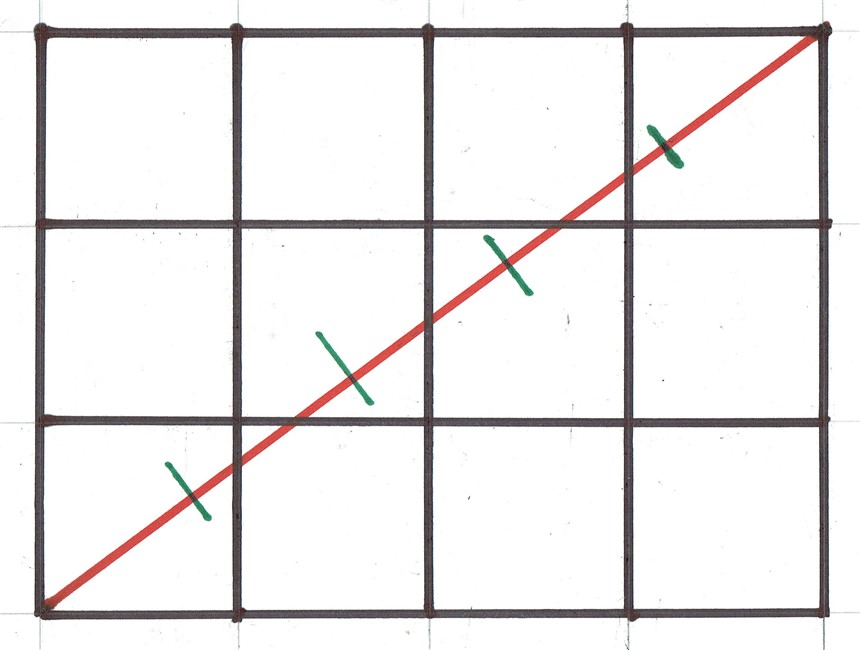
The (3 X 4) rectangle is a math superstar because its diagonal creates a perfect (3-4-5) right-angled triangle.
This special shape is one of the most famous examples of a Pythagorean triple, used by mathematicians, engineers, and builders worldwide.
Here is why this rectangle is a huge deal in geometry:
1. Secret of the Diagonal
When you draw a straight line from one corner of a (3 X 4) rectangle to the opposite corner, you slice it into two identical right-angled triangles. The shorter sides measure (3) and (4) units, and the diagonal line automatically measures exactly (5) units.
2. The Magic Math Rule
This triangle perfectly proves the Pythagorean theorem. This famous geometric rule states that if you square the two shorter sides of a right triangle and add them together, the sum equals the square of the longest side (called the hypotenuse).
The more you design and make things with triangles the more you will understand.
Long before the Pythagorean theorem was formally proven, ancient civilizations used this exact relationship to build perfectly square corners.
This special shape is one of the most famous examples of a Pythagorean triple, used by mathematicians, engineers, and builders worldwide.
Here is why this rectangle is a huge deal in geometry:
1. Secret of the Diagonal
When you draw a straight line from one corner of a (3 X 4) rectangle to the opposite corner, you slice it into two identical right-angled triangles. The shorter sides measure (3) and (4) units, and the diagonal line automatically measures exactly (5) units.
2. The Magic Math Rule
This triangle perfectly proves the Pythagorean theorem. This famous geometric rule states that if you square the two shorter sides of a right triangle and add them together, the sum equals the square of the longest side (called the hypotenuse).
The more you design and make things with triangles the more you will understand.
Long before the Pythagorean theorem was formally proven, ancient civilizations used this exact relationship to build perfectly square corners.
The (3 X 4) Rectangle and the Diagonal