


The Drawing Board
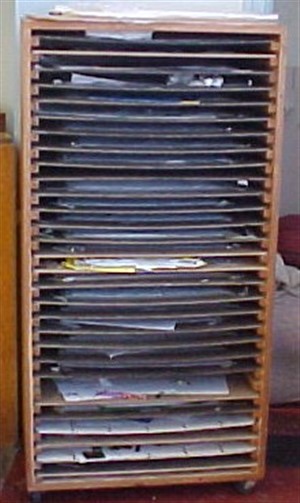
Below are two cabinets that held my class set of drawing boards. The one on the left was portable and on wheels. The one on the right was perminent.
Why a Drawing?
Learning how to use and care for their personal drawing board was the foundation in our advanced technical drawing unit.
From day one, using their boards as a drawing platform, the students dived into the world of orthographic and isometric drawing.
While these two technical drawing terms might sound too complex for 10 year old kids, they’re not. In fact they are essential tools for how the technical world is visualized and without a doubt, working on drawings was a pleasant time of the day for them.
Orthographic drawing (2D views) and isometric drawing (3D perspectives) helped my students put forth their creative ideas into precise, technical plans.
Learning these skills is about more than just drawing a line; it developed:
Spatial Reasoning: The ability to visualize objects from different angles—a key predictor of success in MST.
Problem Solving: Learning how to break down complex objects into manageable parts and how they connect together.
Careers: Understanding these two skills is the foundational language used by artists, artisans, architects, engineers, graphic designers, and tradespeople every day.
As the year moved on my students mastering these "visual languages," gaining the tools to design, build, and communicate their ideas.
Student Warning! Never wash your drawing board with water! It can make the surface soft and mushy.
Also, stay away from clear "sticky tape." When you peel it off, it can rip the board's skin right off.
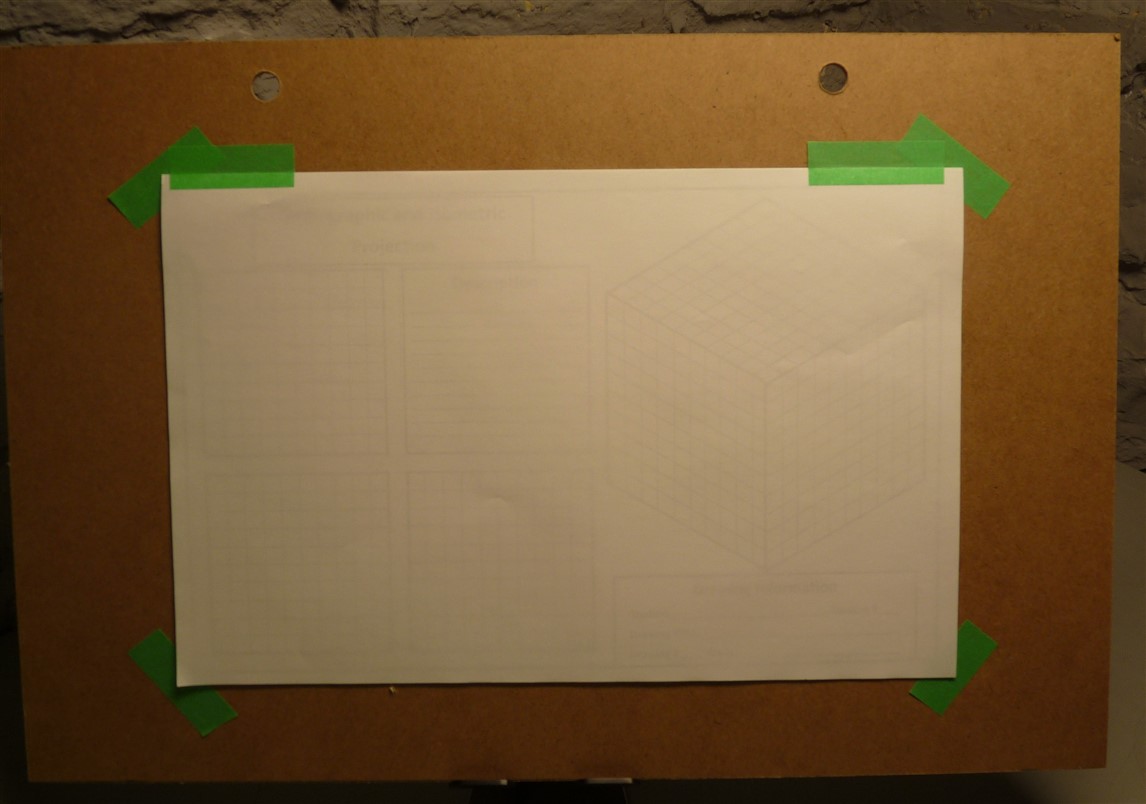
Only use green painter’s tape to hold your paper down. It’s much gentler and keeps your board looking like new!
Learning how to use and care for their personal drawing board was the foundation in our advanced technical drawing unit.
From day one, using their boards as a drawing platform, the students dived into the world of orthographic and isometric drawing.
While these two technical drawing terms might sound too complex for 10 year old kids, they’re not. In fact they are essential tools for how the technical world is visualized and without a doubt, working on drawings was a pleasant time of the day for them.
Orthographic drawing (2D views) and isometric drawing (3D perspectives) helped my students put forth their creative ideas into precise, technical plans.
Learning these skills is about more than just drawing a line; it developed:
Spatial Reasoning: The ability to visualize objects from different angles—a key predictor of success in MST.
Problem Solving: Learning how to break down complex objects into manageable parts and how they connect together.
Careers: Understanding these two skills is the foundational language used by artists, artisans, architects, engineers, graphic designers, and tradespeople every day.
As the year moved on my students mastering these "visual languages," gaining the tools to design, build, and communicate their ideas.
Student Warning! Never wash your drawing board with water! It can make the surface soft and mushy.
Also, stay away from clear "sticky tape." When you peel it off, it can rip the board's skin right off.
Only use green painter’s tape to hold your paper down. It’s much gentler and keeps your board looking like new!



60cm



40cm
Every student in my grade 5/6 class had their own drawing board. It was made from 1/4" tempered masonite and served as a flat, portable surface students could paint, design or technically draw on.
The paper they used was 28cm X 43cm and was centered on the board, held in position using small pieces of masking tape.
The paper they used was 28cm X 43cm and was centered on the board, held in position using small pieces of masking tape.
Do you have a volunteer who can make this for you?
One of these should be standard in all future elementary classrooms.